


Over the past decade, animated videos have become a powerful tool to help you distill complex messages, heighten emotional engagement, and project a memorable brand personality across platforms. By simplifying concepts, boosting shareability, and enabling creative calls-to-action, they increase reach, lift conversion rates, and provide measurable insights so you can optimize campaigns and maximize ROI.
Key Takeaways:
- Use motion and storytelling to raise attention and watch time, driving higher engagement and shares.
- Clarify complex ideas quickly-visual metaphors and pacing improve comprehension and conversion rates.
- Build brand identity with consistent style, characters, and tone to increase memorability and trust.
- Optimize formats for each platform (vertical, captions, thumbnails) to expand reach and ad performance.
- Scale content affordably-templates and repurposing enable testing, iteration, and efficient campaign growth.
The Power of Animation in Storytelling
Animation gives you the tools to compress narrative and brand personality into 15-90 seconds, then deliver it with higher recall and shareability; Dropbox’s early explainer animation is credited with roughly a 10% lift in signups as a direct result. By combining character-driven scenes, kinetic typography, and concise voiceover you can tell a complete story that scales across feed formats, turning complex value propositions into emotionally resonant micro-narratives that people remember and act on.
Engaging Audiences Emotionally
Characters, timing, and sound let you create empathy faster than static copy: a 30-second character-led spot can establish motive, obstacle, and payoff within three beats, so your viewer feels invested before the CTA appears. You should lean on color psychology, subtle facial animation, and tempo shifts to guide emotion; A/B tests often show motion-led creatives lift engagement and watch-through rates significantly compared with still images, especially on mobile where micro-interactions matter most.
Simplifying Complex Concepts
Use sequential motion, visual metaphors, and animated data to make systems tangible-transform abstract flows into step-by-step visuals that your audience can follow in under a minute. You’ll want a three-part script (problem → solution → benefit), concise on-screen labels, and morphing shapes to show relationships; companies that replace text-dense pages with short explainers typically see measurable uplifts in comprehension and conversion.
Practically, storyboard each scene to map a single idea per shot, then animate transitions that illustrate cause and effect-morph an inbox into a graph, animate API calls as arrows, or use growing bars to show time savings. Pair motion with selective numbers (e.g., “save 42% onboarding time”) and test thumbnails, captions, and CTAs; track CTR, watch-through, and support-ticket volume to quantify impact and iterate on what short animation communicates best to your audience.
Boosting Engagement Rates with Animated Content
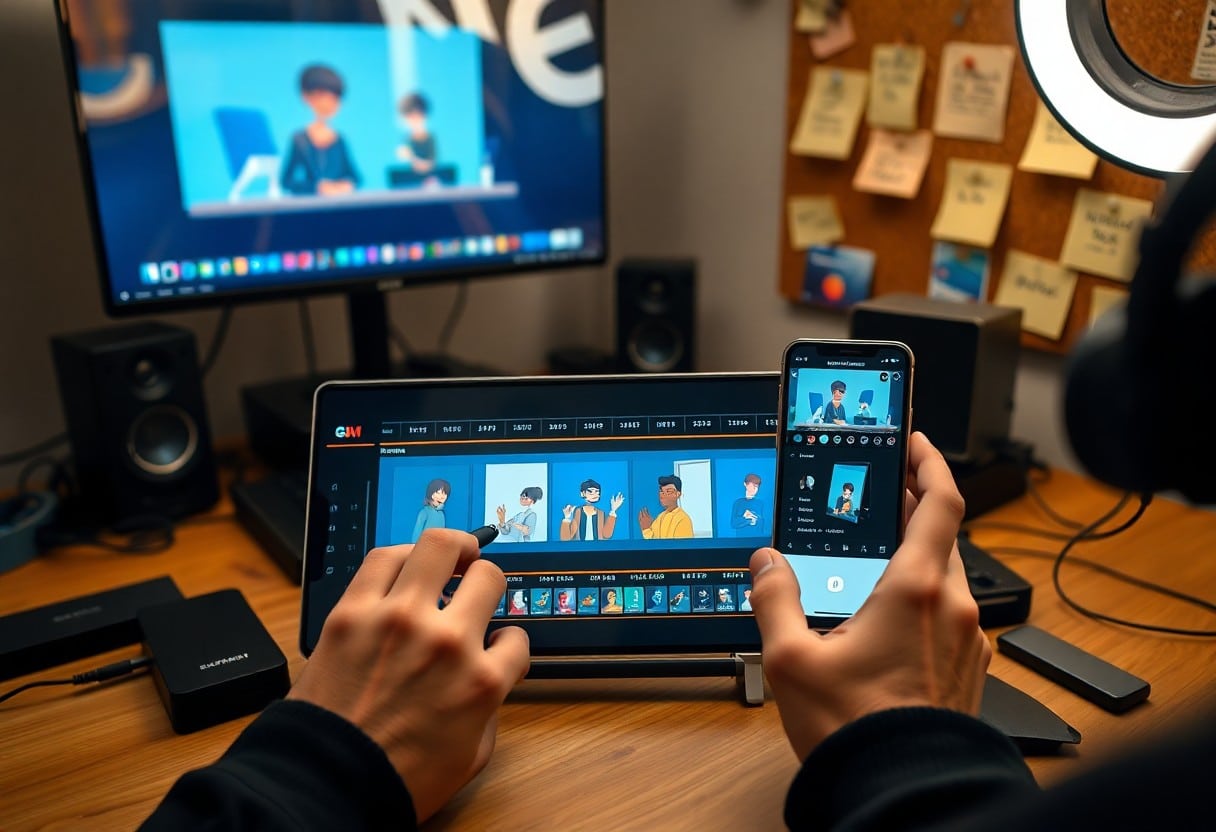
When you swap static images for short animated clips, you drive measurable lifts: 15-30 second animations can raise click-through rates by up to 25% and boost average watch time by roughly 40% versus static posts. You can reuse a single micro-animation across Stories, Reels, and ads to multiply impressions while keeping production costs low. Brands that replace product shots with narrative animations often see higher saves, comments, and algorithmic reach, translating directly into follower growth and improved campaign ROI.
Increased Shareability
You boost shareability by packaging complex ideas into 10-20 second animations that people feel compelled to pass on; campaigns using micro-animations see reshares rise 2-3x versus static posts. Add clear captions, a single value-led CTA, and a relatable hook, and shares climb further-one mid-size e-commerce campaign increased user-generated shares by 38% after switching to animated product demos and quick how-tos.
Attracting Attention in News Feeds
In crowded feeds you use motion to stop the scroll: short animations can increase view-through rates by up to 60% in A/B tests and improve first-second attention metrics, prompting users to pause and engage. Test bold entrance moves or looping micro-animations to outperform autoplay thumbnails; when a user pauses for even 1-2 seconds, your odds of earning a click or comment rise substantially, particularly on mobile where most social time happens.
Prioritize a 1-3 second visual hook, then deliver your core message within 15 seconds; you should test 9:16 vertical and 1:1 square formats because vertical occupies more screen space and can lift completion rates by 25-40%. Also optimize autoplay thumbnails, loop points, and always include on-screen text for silent viewing-campaigns that combine vertical format, captions, and a strong 3-second hook typically lower CPM and increase CTR in feed placements.
Enhancing Brand Identity Through Animation
Animation lets you encode logo, color, and tone into motion cues that boost recognition and trust. By standardizing character rigs, type treatments, and a 3-5 color palette across ads and stories, brands report 60-70% higher recall versus static imagery in multiple studies. Mailchimp’s Freddie and Chipotle’s stop‑motion short show how recurring animated assets turn one-off posts into a coherent identity across Instagram, TikTok, YouTube and paid banners.
Consistent Visual Language
Establish a motion and color system you use across formats. For example, define 3 primary transitions (fade, slide, bounce), 2 pacing tiers (fast 0.2-0.4s, slow 0.6-1s) and a single type scale for captions; this reduces production time by up to 40% when scaling campaigns. When you stick to these rules, viewers recognize your posts within seconds and engagement on repeat-format reels improves in A/B tests.
Creating Memorable Characters
Characters give your brand a human voice: simple silhouettes, a two-color palette, and one defining prop (like Freddie’s mailbag) make characters instantly identifiable across thumbnails and 6-second ads. You should develop a 3-state expression set (neutral, excited, concerned) and reuse voice cues so characters boost shareability and lift recall in short-form feeds.
You should plan character deployment across four touchpoints-organic posts, paid ads, in‑app stickers, and customer support bots-to maximize exposure. Build a 12-24 fps rig with modular limbs for quick iterations, apply squash‑and‑stretch for expressiveness, and record three voice takes (short, warm, playful) for A/B testing. When you run character-led A/B tests, expect 15-25% higher CTR and 10-18% longer average watch time versus comparable non-character ads.
Strategies for Integrating Animated Videos into Social Media
Repurpose longer explainers into 3-6 snackable clips (15-30s) to boost reach and test formats rapidly; you can turn a 2-minute demo into five distinct hooks, a how-to, and a CTA-driven testimonial. Prioritize vertical 9:16 for Reels/Shorts, 1:1 for feed ads, and always add captions because up to 85% of social viewers mute sound. Use clear thumbnails, consistent branding, and publish 3-5 animated posts weekly while A/B testing opening frames and CTAs.
Platform-Specific Best Practices
For Instagram Reels and TikTok favor 9:16 vertical, tight 3-second hooks, trending audio, and 15-30s runtimes; LinkedIn performs best with 60-120s educational clips in 16:9 or 1:1 for B2B. Facebook benefits from captions and 1-2 minute native uploads, while YouTube Shorts should stay under 60s and lean into serial content. You should adapt tone-authentic & playful on TikTok, informative and data-driven on LinkedIn-and tailor CTAs to each platform’s user intent.
Measuring Success and Analytics
Track view count, watch time, completion rate, CTR, engagement rate (likes/comments/shares), saves, and downstream conversions using native analytics plus Google Analytics and UTM tagging. You should monitor drop-off points (3s, 10s, 30s) to optimize openings, set benchmarks by platform (short-form goal: high completion, long-form goal: sustained watch time), and connect pixels to ad platforms to quantify ROAS from animated creatives.
Set 3-5 KPIs tied to the funnel-awareness (impressions, VTR), consideration (engagement rate, CTR), and conversion (CVR, revenue). Run controlled A/B tests on thumbnails, first 3 seconds, and CTAs; one DTC brand raised CTR 22% and conversion 12% after swapping to animated demos and testing intros. Use cohort analysis to compare retention by creative, then reallocate budget to variants that improve completion and lower CPA.
Overcoming Common Challenges in Creating Animated Content
You’ll face tight timelines, alignment across teams, and the need to translate complex ideas into concise visuals; plan for 2-6 weeks to produce a 60-90 second explainer and budget a core team of 2-5 people (scriptwriter, animator, voice, editor). Prioritize a clear brief, a single decision-maker to reduce revisions, and versioned deliverables for different platforms to avoid repeated edits.
Budget Considerations
You can choose template-based options at $300-$1,500, freelancers typically charge $1,000-$5,000, and agencies range $5,000-$25,000 for a polished 60-90s piece; factor 20-30% extra for sound design, revisions, and localization. If you need rapid social ads, allocate toward shorter, higher-frequency pieces-three 15-30s cuts often outperform one long video in ad spend efficiency.
Finding the Right Animation Style
You should match style to goal: motion graphics for data-heavy B2B, 2D character animation for storytelling and brand warmth, 3D for product demos, and stop-motion for artisanal brands. Aim for 15-30 seconds on paid social, 60-90 seconds for product explainers, and keep brand colors and type consistent to preserve recognition across formats.
To narrow choices, build mood boards and produce a 5-10 second animatic for two styles, then A/B test each with ~10,000 impressions to compare 3-second view rate, CTR, and watch-through; expect an animatic in 3-5 days and full production in 2-6 weeks, which helps you select a style that balances performance, cost, and production time.
Summing up
Ultimately you can harness animated videos to distill complex ideas, heighten engagement, and make your social content more shareable and memorable; by reinforcing your brand voice, optimizing for platform formats, and testing variants you boost retention and conversions, turning casual viewers into customers and maximizing your marketing ROI.
FAQ
Q: What makes animated videos effective for social media engagement?
A: Animated videos combine motion, color, and pacing to interrupt scrolling and increase dwell time. They simplify complex ideas into digestible visuals, use visual hooks and transitions to guide attention, and perform well with captions and sound-off viewing. Because animation can be stylized to fit a brand’s voice, it often gets higher shareability and repeat views than static posts.
Q: How do animated videos improve brand storytelling and recall?
A: Animation lets you design a consistent visual language-characters, color palettes, and motion patterns-that reinforces brand identity across posts. Short, focused narratives with clear cause-and-effect and repeated motifs boost memory retention, while concise scripts and strong visual metaphors make messages easier to recall. Strategic logo placement and signature sounds further strengthen brand association over time.
Q: Which formats and lengths work best for different social platforms?
A: Vertical short-form (9:16) is ideal for TikTok and Instagram Reels-aim for 9-30 seconds with a strong hook in the first 2-3 seconds. Stories and in-feed ads often perform best at 5-15 seconds. LinkedIn and Facebook allow slightly longer explainer videos (30-90 seconds) for B2B content, while YouTube supports both short ads (6-30 seconds) and longer explainers (up to a few minutes). Always optimize aspect ratio, opening frame, and captions per platform.
Q: How can animated videos drive conversions and measurable ROI?
A: Use animation to demonstrate product benefits, remove friction in the decision process with clear step-by-step visuals, and overlay concise CTAs. Tailor creatives to audience segments and A/B test hooks, thumbnails, and length to improve click-through and view-through rates. Track conversions with UTM parameters and platform pixels-strong creative often reduces cost-per-acquisition by increasing engagement and message clarity.
Q: What are practical tips for creating animated videos on a budget?
A: Start with a tight script and storyboard to avoid wasted revisions, repurpose templates and motion libraries, and reuse assets across multiple clips to multiply reach. Use stock sound effects and affordable voiceover options or short-form text-to-speech for drafts, then upgrade key pieces as performance data justifies it. Focus spending on the hook and thumbnail; iterative testing and analytics will guide where to invest for better results.