

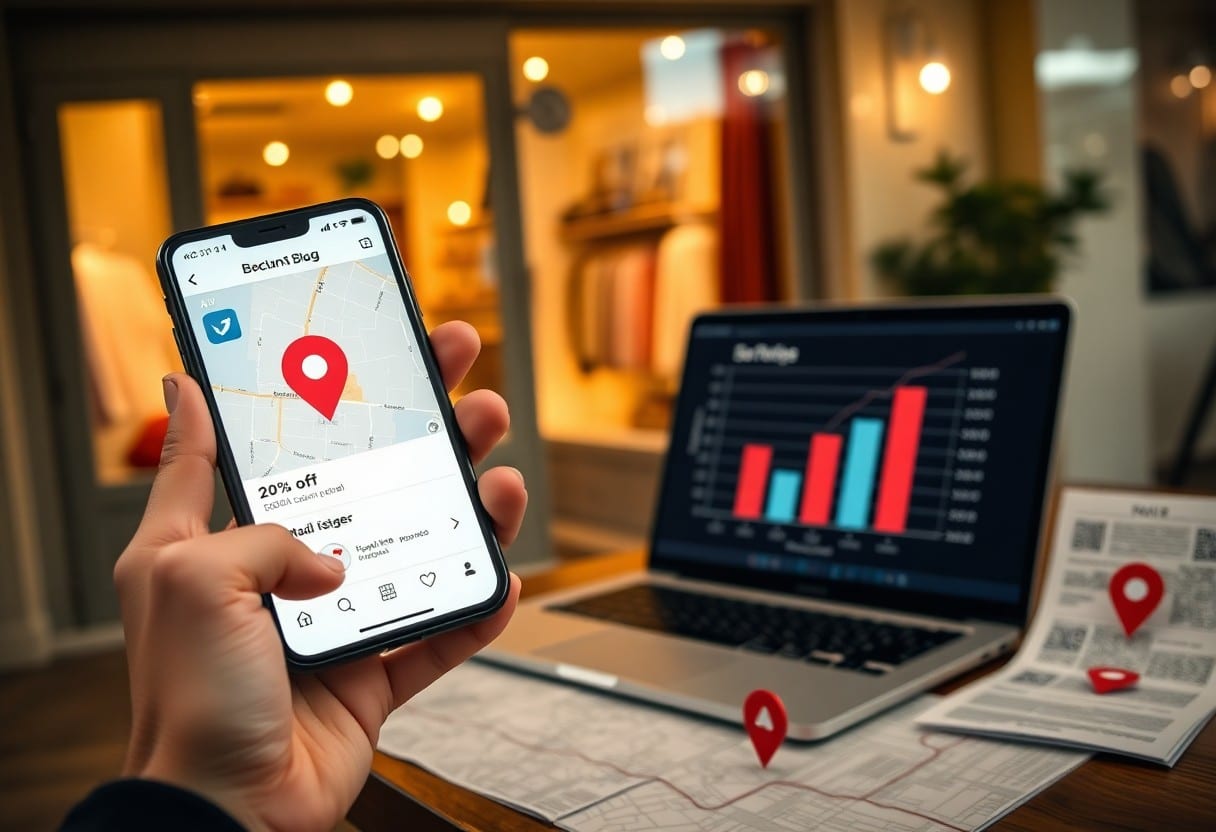
Many small-brand owners like you can use hyperlocal targeting to concentrate ad spend on nearby customers, increase conversions, and reduce wasted impressions. It lets you measure foot traffic, tailor messages to neighborhood needs, and improve ROI with precise, low-cost campaigns.
Key Takeaways:
- Hyperlocal targeting increases ad relevance by serving content tailored to neighborhood interests, lifting engagement and conversion rates per impression.
- Smaller, precisely targeted audiences reduce wasted ad spend, lowering cost-per-acquisition and improving return on ad dollars.
- Local data and foot-traffic attribution provide clearer measurement of campaign impact and speed up optimization of creative and offers.
- Community-focused messaging and local partnerships build trust and repeat business, increasing customer lifetime value in nearby markets.
- Testing at neighborhood scale delivers fast feedback on messaging and promotions, enabling iterative campaign improvements with minimal budget.
Defining Hyperlocal Targeting in the Social Media Ecosystem
Hyperlocal targeting narrows paid and organic reach to blocks or individual storefronts, letting you prioritize local relevance over mass impressions and increase conversion efficiency on social channels.
From Broad Geographies to Micro-Radius Precision
Shift from broad zip-code buys to micro-radius campaigns so you can target foot traffic, local events, or competitor locations with cost-effective precision.
Leveraging GPS and Behavioral Data for Small Brands
Tap GPS pings and behavioral signals to serve timely offers when you know customers are nearby, improving CTR and in-store visits for your brand.
By combining GPS accuracy with past engagement and purchase intent, you can craft hyper-relevant creative, schedule posts for peak local hours, exclude low-value zones, and track conversions through promo codes, beacon check-ins, or attribution pixels to prove ROI for each micro-targeted campaign.
Optimizing Ad Spend and Reducing Wasteful Impressions
Cutting wasted impressions frees budget so you can concentrate on neighborhoods where conversions occur, improving ROI through tighter time, geo, and demographic filters across social platforms.
Minimizing Cost-Per-Acquisition Through Local Relevance
You lower cost-per-acquisition by targeting nearby shoppers with contextually relevant ads-reducing irrelevant clicks, increasing conversion rates, and stretching small budgets farther.
Reallocating Budgets to High-Intent Neighborhood Clusters
Targeting high-intent neighborhood clusters lets you reallocate spend from broad segments to concentrated pockets of demand, raising ROAS while cutting wasteful reach.
When you identify clusters using on-site visits, local search signals, and foot-traffic proxies, you can set dynamic bids and creative tailored to micro-audiences. Shift budget to clusters that clear performance thresholds, run short A/B tests on messaging, and use geofenced conversion tracking to attribute outcomes, so your spend maps directly to measurable neighborhood-level returns.

Strengthening Brand Authenticity via Community-Centric Content
You should embed local stories and everyday neighborhood moments into posts, using familiar visuals and specific calls-to-action that mirror nearby priorities to build trust and long-term loyalty.
Tailoring Messaging to Local Cultural Nuances
Adjust your tone, references, and posting times to reflect local events, dialects, and values so messages resonate with residents and drive higher engagement rates.
Utilizing User-Generated Content from Local Advocates
Showcase authentic posts and reviews from nearby advocates, credit creators clearly, and rotate examples so you maintain fresh social proof that feels personal to local audiences.
Solicit local content with simple geotagged prompts, micro-influencer partnerships, or themed contests; you should secure permission, offer visible attribution or modest incentives, and repurpose the strongest submissions into targeted ads and highlight reels that convert trust into sales.
Bridging the Gap Between Digital Discovery and Physical Foot Traffic
You can convert clicks into customers by aligning local ads, store hours and mobile CTAs so nearby users find and visit; simple offers, clear directions and real-time availability turn discovery into measurable foot traffic you track with geo-attributed codes and visit analytics.
Implementing Real-Time, Location-Triggered Incentives
Use geofencing, push notifications and time-limited offers to trigger discounts when prospects are nearby, sending redeemable QR codes or instant coupons that drive immediate visits; track redemptions and in-store conversions to quantify social ROI.
Enhancing the “Near Me” Search and Discovery Experience
Optimize your profiles and local pages with precise categories, accurate hours, schema markup and high-quality photos so you appear in “near me” queries; prompt reviews and click-to-call buttons increase trust and spur visits.
Consider creating store-level landing pages, syncing inventory and pricing, and implementing structured data so maps and voice assistants reliably surface your locations. You should prioritize fast mobile pages, integrate booking or pickup options, respond to reviews promptly, and tag campaigns with UTM plus in-store codes to attribute visits and sales back to specific social activity.
Advanced Attribution Models for Hyperlocal ROI
Attribution models that combine geofencing, footfall data and timestamped impressions let you assign credit to hyperlocal social touchpoints, clarifying ROI within campaigns.
- You test time-window and distance-based credit to reflect real-world shopping paths.
- You apply weighted multi-touch models combining impressions, engagements and store visits.
- You compare incremental lift against holdout areas to isolate campaign impact.
Attribution Components
| Component | What it tells you |
|---|---|
| Geofence impressions | You see exposure by block and time to target high-opportunity windows. |
| Footfall data | You match visits to campaign windows to validate visit attribution. |
| Engagement metrics | You gauge content resonance across microsegments for creative tuning. |
| POS transactions | You attribute sales lift to specific hyperlocal activations and offers. |
Correlating Social Engagement with In-Store Conversions
Measuring social interactions against POS and visit data helps you link likes, comments and click-throughs to actual purchases within specific stores, revealing which creatives drive foot traffic.
Utilizing Granular Analytics to Refine Targeted Outreach
Analyzing neighborhood-level engagement and time-of-day patterns lets you adjust messaging, offers and ad frequency to match local behavior and lift conversion rates.
Combining hyperlocal heatmaps, cohort analysis and timestamped ad exposures, you can test micro-audiences, refine creative by block and hour, and quantify incremental lift per neighborhood; this lets you reallocate spend to top-performing microsegments and reduce wasted impressions while improving in-store visits and average transaction value.
Strategic Challenges and Scalability for Small Enterprises
You confront tight budgets and limited staff while scaling hyperlocal campaigns, forcing trade-offs between precise targeting, performance measurement, and consistent local engagement.
Data Privacy and Geofencing Limitations
Privacy rules cap geofence precision and retention, so you must collect clear consent, anonymize identifiers, and adapt targeting as platform policies shift.
Streamlining Content Management Across Multiple Local Hubs
Coordination across local hubs forces you to build reusable templates, enforce brand guidelines, and schedule localized variants without overburdening small teams.
Centralizing assets in a shared CMS lets you maintain templates, approved copy, and local images while role-based permissions and automated workflows reduce approvals and errors; use localization rules, dynamic fields, and tagging alongside local performance dashboards so you scale content without ballooning headcount or losing control.
Conclusion
On the whole you can use hyperlocal targeting to reach nearby customers with tailored messages, reduce ad waste, increase engagement, and measure conversions more accurately so you spend less while growing revenue and brand loyalty.
FAQ
Q: What is hyperlocal targeting and how can small brands use it?
A: Hyperlocal targeting focuses ads on very specific geographic areas such as neighborhoods, postal codes, or a radius around a storefront. Small brands can use geofencing, location-based social ads, local hashtags, and in-app location signals to reach nearby users when they are most likely to act. Campaigns should combine location rules with audience signals like past visitors, local interests, and time-of-day to make creative and offers more relevant.
Q: How does hyperlocal targeting improve social media ROI for small brands?
A: Hyperlocal targeting reduces wasted impressions by narrowing reach to users who can realistically visit or buy, which typically raises click-through and conversion rates. Ads tailored to local context and schedules increase engagement and drive higher conversion velocity, lowering cost per acquisition. Tracking in-store visit lift and local coupon redemptions links digital spend directly to offline sales, improving measured return on ad spend.
Q: What specific tactics should a small brand run to get measurable results quickly?
A: Define a realistic catchment area and segment audiences by distance and behavior. Run time-bound local offers and mobile-friendly calls to action such as click-to-call, directions, or “claim in store” coupons. Use short A/B tests on headline, offer, and creative, and set up offline conversion tracking with promo codes or POS tags. Partner with micro-influencers who have local followings and boost posts that show high organic local engagement.
Q: Which metrics best show whether hyperlocal campaigns are improving ROI?
A: Monitor cost per click, click-through rate, conversion rate, and cost per acquisition for local campaigns versus broader ones. Track store visits, local coupon redemptions, and incremental sales tied to campaign periods or promo codes to capture offline impact. Compare local campaign return on ad spend and customer acquisition cost to baseline channels, and measure repeat purchases among locally acquired customers to estimate lifetime value.
Q: What limitations and privacy concerns should small brands consider, and how can they mitigate them?
A: Precise location targeting can reduce audience size and increase frequency, which may raise ad fatigue and cost. Privacy rules like GDPR and CCPA require clear consent and safer use of location data, so brands should rely on aggregated location signals, first-party opt-ins, and anonymized analytics. Use transparent privacy notices, short retention windows for location data, and test broader radius expansions or lookalike audiences to scale without relying solely on tiny geofenced pools.