

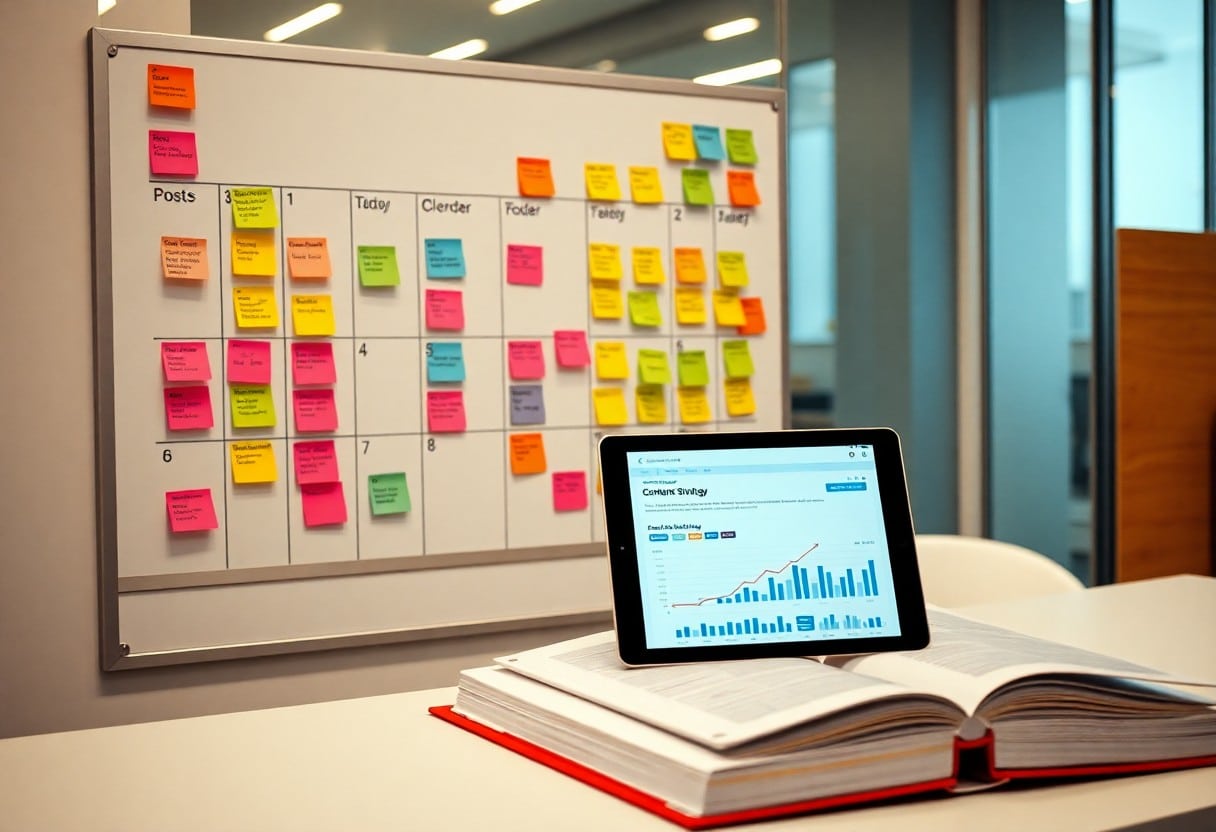
Most successful brands utilize a social media content calendar to streamline their strategy and enhance engagement. This guide will equip you with effective tactics to create, organize, and manage your social media posts, ensuring you maintain a consistent and impactful presence. You’ll also find a versatile template that you can customize to fit your unique needs, making the planning process more efficient and effective. With the right approach, you can maximize your reach and connect meaningfully with your audience.
Key Takeaways:
- Organizes social media posts and improves consistency across platforms.
- Facilitates planning around marketing campaigns, holidays, and events.
- Includes areas for content ideas, posting schedules, and engagement metrics.
- Encourages collaboration among team members for content development.
- Enables tracking of content performance and adjustments to strategy as needed.

The Blueprint for a Powerful Social Media Content Calendar
A well-structured content calendar serves as the backbone of your social media strategy, ensuring that your messaging remains consistent and aligned with marketing objectives. By mapping out your content in advance, you can align posts with campaigns, seasonal events, and audience engagement trends. This blueprint not only streamlines your workflow but also allows for agile adjustments based on real-time analytics and feedback.
Crafting Your Content Pillars
Content pillars act as the foundation of your social media strategy, guiding your messaging and engagement efforts. Identify three to five key themes that resonate with your audience and support your brand’s mission. For instance, if you’re a fitness brand, pillar topics might include nutrition tips, workout motivation, success stories, and product highlights, allowing for diverse yet cohesive content.
Aligning With Your Brand Voice and Goals
Your brand voice sets the tone for all communication, serving as a consistent element across platforms. Make sure that your content pillars reflect not only your audience’s interests but also your brand’s personality and objectives. For example, a playful brand might engage differently than a serious one, thus impacting the way you share information, promote products, or interact with followers.
To effectively align content with your brand voice and goals, start by defining your brand’s mission and values. Consider how you want your audience to perceive you; for instance, a tech brand might emphasize innovation and efficiency through informative yet approachable content. Use feedback and analytics to refine your tone and approach, ensuring that every post resonates with your target demographic while reinforcing your overarching objectives. Consistency is key, so establish guidelines to maintain this voice across all channels, creating a unified brand experience that fosters loyalty and engagement.
Timing is Everything: The Art of Scheduling Your Posts
Effective timing can significantly enhance your social media engagement rates. Analyzing your audience’s online behavior reveals when they are most active, allowing you to schedule posts that capture attention effectively. Utilize insights from platform analytics to pinpoint optimal posting times, and adjust your strategy based on ongoing performance metrics. Consistent posting at strategic times builds anticipation and keeps your brand top of mind.
Best Practices for Peak Engagement
Maximizing engagement hinges on understanding your audience’s habits. Conduct audience surveys or poll your followers to identify preferred times for interaction. Mixing content types, such as videos, polls, and images, during peak hours can heighten interest. Additionally, leveraging significant dates and events for thematic posts can capture your audience’s attention when it’s most relevant, amplifying interactions and shares.
Tools and Techniques for Efficient Planning
Utilizing scheduling tools simplifies your content management. Platforms like Hootsuite and Buffer allow you to automate post timings, ensuring consistency across channels. Integrate calendars like Google Calendar or Trello to visualize your content schedule and deadlines. Furthermore, content batching encourages focused work sessions, resulting in higher productivity and creativity. This method allows you to prepare multiple posts in advance for seamless execution.
Incorporating tools such as Later or CoSchedule provides robust features for planning and analytics. These platforms offer drag-and-drop functionality to easily arrange posts and visualize your overall strategy. Real-time analytics enable you to adapt your posting schedule dynamically, ensuring that you are continuously optimizing for engagement. Utilizing templates for different types of posts can further streamline the planning process, allowing you to fill in content quickly while maintaining a consistent brand voice across channels.
Content Types That Captivate and Convert
Engaging your audience involves a diverse mix of content types that resonate. High-quality visuals, engaging videos, and interactive polls can significantly enhance user interaction. Balance is key; incorporating storytelling with strategic calls-to-action ensures your content captivates and converts. Focus on these types:
- Informative blog posts
- Engaging videos
- Eye-catching infographics
- Interactive polls or quizzes
- Behind-the-scenes content
Thou must tailor your content to your audience’s preferences for optimal engagement.
| Content Type | Purpose |
| Blog Posts | Educate and inform |
| Videos | Engage and entertain |
| Infographics | Simplify complex information |
| Polls/Quizzes | Boost interactivity |
Balancing Entertainment and Information
Striking a balance between entertainment and information keeps your audience engaged while providing value. Integrate storytelling elements with informational content, allowing your brand personality to shine through. This approach ensures followers are entertained and informed, fostering loyalty and engagement.
Harnessing User-Generated Content and Community Engagement
User-generated content (UGC) serves as powerful social proof, showcasing authenticity and community involvement. By encouraging your audience to share their experiences or creations related to your brand, you not only enrich your content pool but also foster a sense of belonging and loyalty. Highlighting UGC demonstrates trust in your audience and promotes organic engagement, as seen in brands like GoPro and Starbucks, where community contributions amplify brand visibility.
Building a thriving community around your brand involves a two-way conversation where customers feel valued. Showcase their stories on your platforms, host contests, and create hashtags to collect their contributions. Leveraging UGC increases engagement and strengthens your brand’s identity, leading to higher conversions and customer loyalty. Thou should embrace this powerful strategy to not only enhance your content but also deepen customer relationships.

Data-Driven Decisions: Analyzing Performance and Adjusting Strategies
Utilizing data to refine your social media approach lends a structured framework for maximizing impact. Analyzing performance metrics allows you to uncover what resonates best with your audience, facilitating informed adjustments to your strategies. A continual feedback loop not only enhances engagement but also drives conversions. Regularly assessing this data helps you stay agile and responsive to emerging trends and audience preferences.
Key Metrics to Track for Social Media Success
Focus on key metrics such as engagement rate, click-through rate (CTR), conversion rate, and reach. These statistics provide insight into how your content performs and how well it connects with your target audience. By monitoring these metrics consistently, you’ll identify patterns and trends that inform future content choices and overall strategy adjustments.
Methods for Iterative Improvement
Incorporating feedback loops into your strategy allows for ongoing optimization of your social media efforts. Use A/B testing techniques to determine which posts generate higher engagement or conversions. Analyze the performance of different formats, times of day, or messaging styles, adjusting your approach based on concrete results. Regular reviews of analytics will highlight successful tactics that can be replicated and underperforming areas that need rethinking.
To effectively implement iterative improvement, establish a consistent schedule for reviewing your analytic data. Weekly or monthly check-ins can help you spot patterns before they become trends. Engaging with your audience through polls or feedback requests can provide qualitative insights to complement your quantitative data. As you refine your approach, stay adaptable, integrating new trends or technologies that can enhance your social media presence and alignment with audience expectations.
Your Roadmap to Consistency: Implementing the Template
Consistency in your social media strategy relies on effectively implementing your content calendar template. Start by establishing a regular posting schedule that aligns with your audience’s active times. Use analytics from your previous campaigns to identify peak engagement hours. This disciplined approach not only bolsters your brand visibility but also enhances audience connection, ultimately driving engagement and loyalty.
Designing a Customizable Content Calendar Template
A customizable content calendar template should reflect your unique brand voice and content strategies. Include categories for different content types, such as promotional, educational, and user-generated content, allowing for a balanced approach. Consider color-coding for quick visual reference and ensuring that every team member knows what to post and when, enhancing overall productivity.
Establishing Accountability and Team Collaboration
Promoting accountability within your content creation team is important for effective collaboration. Assign roles and responsibilities for each content piece, ensuring everyone knows their tasks and deadlines. Utilize collaboration tools such as Trello or Asana for seamless communication and tracking progress. Regular check-ins can keep everyone aligned on goals and upcoming campaigns.
By fostering a culture of accountability, you empower your team to take ownership of their roles, resulting in higher quality content. For instance, setting up a bi-weekly review meeting helps identify any roadblocks and encourages constructive feedback. This practice not only strengthens teamwork but also allows for continuous improvement, paving the way for innovative ideas and more impactful campaigns.
Final Thoughts on Sustaining Engagement and Growth
Commit to Continuous Improvement
Sustaining engagement requires a commitment to evolve based on audience preferences and platform trends. Regularly engage with your community through polls and feedback forms to understand what resonates. For instance, a brand that shifted its content focus based on audience input increased engagement rates by over 50% in just three months. Implementing iterative changes ensures your strategy remains relevant and dynamic.
Leverage the Power of Analytics
Deep dives into analytics can unveil actionable insights that inform your content strategy. Examine metrics such as click-through rates and audience demographics to tailor your content effectively. A company that analyzed their best-performing posts identified that video content outperformed static images by a margin of 3:1, resulting in a significant uptick in follower growth.
Be Authentic and Relatable
Authenticity drives engagement. Share behind-the-scenes moments, user-generated content, or stories that reflect your brand’s values. For example, brands that share customer testimonials often see a remarkable increase in trust, leading to a 24% increase in conversion rates. Building genuine connections fosters loyalty, transforming casual followers into devoted advocates.
FAQ
Q: What is a Social Media Content Calendar?
A: A Social Media Content Calendar is a planning tool that helps marketers organize and schedule their social media posts in advance. It outlines what content will be posted, where it will be published, and when it will be shared across various social media platforms.
Q: How can a content calendar improve my social media strategy?
A: A content calendar improves your social media strategy by ensuring consistent posting, allowing for better content planning, Streamlining the creation process, and helping track performance metrics over time. It also facilitates collaboration among team members and ensures alignment with marketing goals.
Q: What should be included in a Social Media Content Calendar template?
A: A Social Media Content Calendar template should include fields for the date and time of posts, content type (e.g., image, video, link), post copy, hashtags, associated media, platform, and performance tracking metrics. This structure helps keep content organized and easy to manage.
Q: How often should I update my Social Media Content Calendar?
A: It’s advisable to update your Social Media Content Calendar regularly, ideally on a monthly basis. This allows you to adapt to trends, seasonal events, and audience engagement feedback while keeping your content fresh and relevant.
Q: Are there any tools available to create a Social Media Content Calendar?
A: Yes, there are several tools available for creating a Social Media Content Calendar, such as Trello, Asana, Hootsuite, and Google Sheets. These platforms offer templates and features that facilitate collaborative planning, scheduling, and performance tracking.