

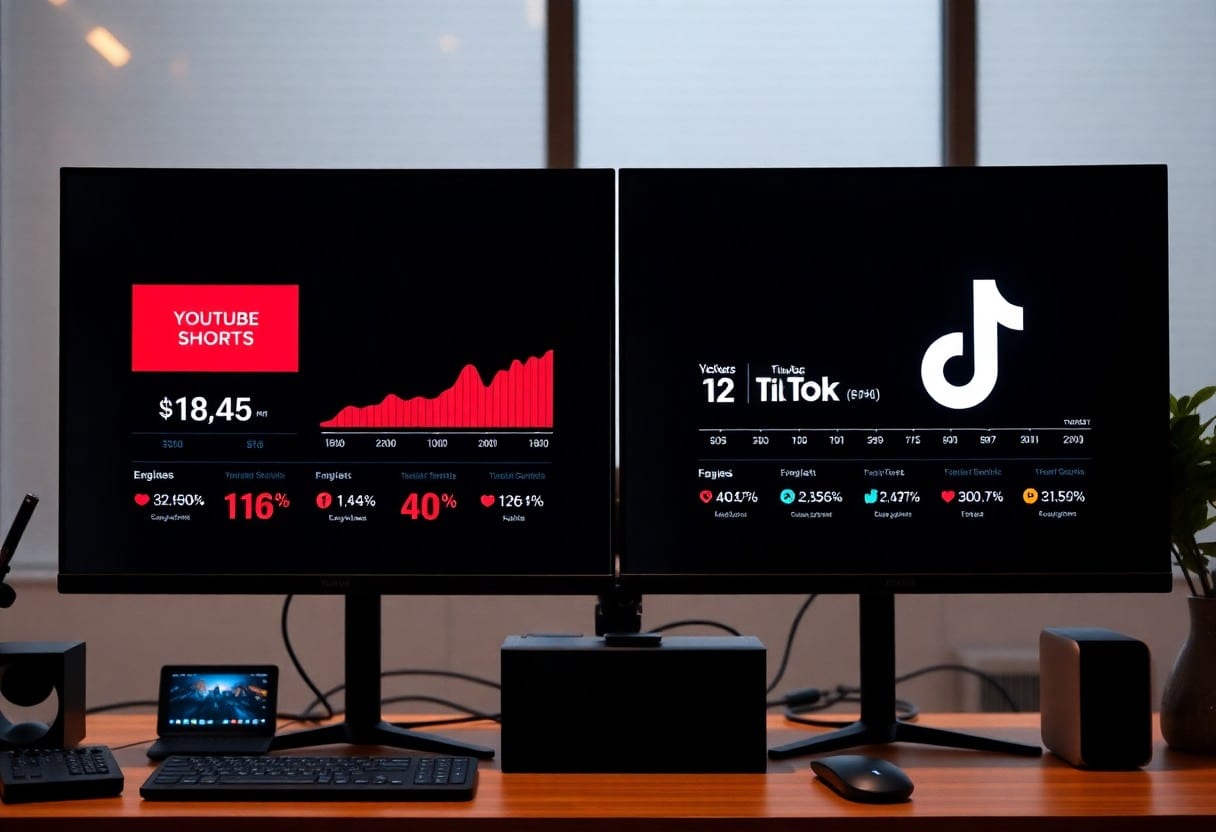
You may be curious about how YouTube Shorts stacks up against TikTok in terms of user engagement. This post examines into a detailed comparison of both platforms over a 30-day period, analyzing data on views, likes, shares, and comments. By understanding these metrics, you can make informed decisions to maximize your content strategy and audience reach on each platform. Discover the insights that could enhance your visibility and connect you more effectively with your audience.
Key Takeaways:
- YouTube Shorts generally have a longer average view duration compared to TikTok.
- TikTok tends to have higher engagement rates in terms of likes and comments.
- YouTube Shorts benefits from the platform’s existing user base and discoverability features.
- Content trends differ, with TikTok favoring trends and challenges, while YouTube Shorts allows for diverse content formats.
Overview of YouTube Shorts
YouTube Shorts offers a platform for creators to engage users with quick, captivating videos designed for mobile viewing. This feature allows you to create and share 60-second clips, leveraging YouTube’s extensive audience base. With built-in editing tools, you can add music, text, and effects to enhance your content, making it easy to produce compelling videos that resonate with viewers.
Format and Features
YouTube Shorts supports a vertical format, optimized for quick consumption and mobile-friendly viewing. Creators can integrate popular music tracks, visual effects, and text overlays to make their content more engaging. Additionally, the Shorts camera allows users to create clips up to 60 seconds, encouraging creativity in bite-sized storytelling that reflects trending topics and challenges.
Audience Demographics
Your audience on YouTube Shorts primarily comprises younger viewers, with 70% of users aged 18-34. This demographic is actively seeking quick entertainment and trends, making it crucial for you to tailor your content to resonate with their preferences. Over 6.6 billion views per day highlight the platform’s growing appeal among Gen Z and millennial users.
The diverse audience represents significant opportunities for niche targeting. Young adults favor humor, lifestyle, and challenges, while older users engage with educational content. This broad range allows creators to experiment with various genres, appealing to different subsets of the audience. Moreover, the global reach of YouTube offers the chance for your content to gain traction across borders, enhancing engagement and potential virality. Adjusting your content strategy to fit these demographic insights can significantly impact your reach and effectiveness on the platform.
Overview of TikTok
TikTok has rapidly evolved into a leading social media platform, emphasizing short-form video content that captivates millions worldwide. Users can create, share, and discover videos ranging from 15 seconds to 3 minutes, making it a dynamic space for creativity and self-expression. As a platform primarily built on trends, challenges, and viral content, TikTok fosters community interaction and participation like few others.
Format and Features
TikTok’s format relies heavily on engaging video formats complemented by a rich array of features including filters, effects, and an extensive music library. You can effortlessly remix trending sounds and utilize tools like Duets and Stitch to create unique content that resonates with your audience. Short, snappy videos often utilize popular hashtags and challenges to enhance discoverability.
Audience Demographics
The TikTok audience is predominantly young, with approximately 60% of its users between the ages of 16 and 24. However, the platform is gaining traction among older demographics as well, with users aged 25-34 constituting a significant portion of its user base. This diverse demographic allows brands to engage a broad audience with varied interests.
The platform’s appeal stems from its user-generated content and algorithm-driven discovery, attracting approximately 1 billion monthly active users as of 2023. This user base is not only youthful but also highly engaged, often spending upwards of 52 minutes daily on the app. TikTok’s unique ability to connect with users from different backgrounds fosters a melting pot of creativity and cultural exchange, making it a valuable platform for marketers and content creators alike.
Engagement Metrics Defined
Engagement metrics are vital indicators of how users interact with content, shaping your strategy for either YouTube Shorts or TikTok. These metrics include likes, shares, comments, and watch time, each providing a unique perspective on audience involvement. Analyzing these figures allows you to optimize your videos for better reach and effectiveness, tailoring your content to what resonates with viewers.
Likes and Shares
Likes and shares serve as immediate feedback from your audience, indicating approval of your content. On TikTok, a single engaging short can accrue thousands of likes within hours, significantly enhancing visibility through algorithm boosts. Meanwhile, YouTube Shorts users also show high engagement levels, but the shareability aspect can sometimes vary due to the platform’s video format and audience behavior.
Comments and Watch Time
Comments and watch time reflect deeper engagement with your content. On TikTok, viewers often share their thoughts in the comments, delivering insights into viewer sentiment and fostering community interaction. YouTube Shorts, although shorter in duration, emphasizes watch time as a critical metric. Higher watch time indicates content that holds attention, positively influencing the algorithm’s recommendation to potential viewers.
In detail, the comments section not only allows for feedback but also creates an avenue for dialogue, boosting user connection with your brand. For instance, videos with over a minute of average watch time on TikTok often garner more comments, showcasing a cult-like following. Conversely, maintaining a high watch time on YouTube Shorts points to your content’s quality, suggesting that engaging storytelling or compelling visuals can keep viewers glued to their screens, ultimately leading to more interactions and a stronger subscriber base.

Comparative Engagement Data: YouTube Shorts vs TikTok
Analyzing the engagement data of YouTube Shorts and TikTok reveals stark contrasts in user interaction levels. Each platform showcases unique strengths that cater to different audience preferences. Understanding these differences can significantly impact your content strategy, allowing you to tailor your approach based on where your target audience is most engaged.
Daily Engagement Rates
YouTube Shorts averages around 1.5 billion views daily, while TikTok has an impressive 1 billion daily active users. Users on TikTok spend approximately 52 minutes a day on the platform, compared to Shorts users who engage for about 30 minutes. These statistics highlight TikTok’s immersive user experience that drives higher daily engagement rates.
Post Performance Analysis
In post performance analysis, TikTok posts typically gain a higher engagement rate, averaging 17% compared to YouTube Shorts’ 5%. This discrepancy can be attributed to TikTok’s algorithm that promotes viral content more aggressively. Additionally, TikTok utilizes trending sounds and challenges, which often lead to rapid viewer engagement.
Diving deeper into post performance analysis, the average TikTok video garners around 300 interactions (likes, comments, shares) within the first hour of posting, highlighting how quickly content can go viral. YouTube Shorts tends to have a slower engagement ramp-up period. While Shorts can leverage existing subscribers, TikTok’s content discovery features allow your posts to reach broader audiences, making it vital to consider features like hashtags and trends when creating content. Tailoring your approach based on these insights can maximize engagement and overall success on both platforms.

Content Strategy Insights
Your content strategy significantly influences the success of your videos on both platforms. Tailoring your approach based on audience preferences and platform algorithms can lead to better engagement and reach. Analyzing the types of content that perform well on each channel helps pinpoint what resonates most with viewers, enabling you to create targeted, impactful short videos that capture attention and drive interaction.
Best Practices on YouTube Shorts
Create compelling thumbnails and titles that attract clicks, as first impressions matter. Focus on storytelling within your content to keep viewers engaged, utilizing hooks in the first few seconds. Regularly posting consistent content—aiming for at least 3-5 Shorts per week—can enhance visibility, while leveraging trending topics and relevant hashtags increases discoverability.
Best Practices on TikTok
Engage your audience right away by starting with captivating visuals and sound. Use TikTok’s unique editing tools to ensure your videos are dynamic and appealing; incorporating popular sounds or effects boosts your chances of going viral. Participate in challenges and trends to tap into wider conversations, and interact with your audience through comments and duets to foster community.
To further elevate your TikTok strategy, posting at optimal times when your audience is active can significantly enhance engagement. Analyze your analytics to determine these peak times, allowing your content to capture attention in real-time. Additionally, experimenting with video length—keeping your content under 30 seconds generally performs better—ensures retention while still delivering your message effectively. Collaborating with influencers can also amplify your reach and credibility, leading to increased followers and improved engagement rates.
Challenges and Limitations
Both YouTube Shorts and TikTok present unique challenges and limitations that can impact your content strategy. These hurdles often arise from platform-specific restrictions and data gathering limitations that may skew your engagement analysis or influence content performance.
Platform-Specific Restrictions
You may encounter specific restrictions on each platform, such as character limits, video length constraints, and algorithm biases. For instance, TikTok allows videos up to 10 minutes, yet content that’s 15-60 seconds generally garners higher engagement. YouTube Shorts, on the other hand, enforces a strict 60-second duration, pushing creators to be concise and creative.
Data Gathering Limitations
Analyzing engagement data across both platforms is hindered by discrepancies in how each system tracks and reports metrics. For instance, TikTok provides a detailed metrics dashboard, while YouTube Shorts integrates data into its broader analytics framework, complicating comparative analyses.
While TikTok offers insights such as play rates and viewer demographics, YouTube’s analytics focus more broadly on channel performance, often leaving out granular details specific to Shorts. This can mislead your understanding of viewer engagement. Additionally, timing differences in data reporting between platforms can lead to misinterpretations of your content’s impact, making it important to align your analysis methods before drawing conclusions.
Conclusion
Drawing together the engagement data from 30 days of YouTube Shorts and TikTok reveals important insights for your content strategy. If you want to maximize audience interaction, assess which platform resonates more with your target demographic. YouTube Shorts may offer longevity and discoverability, while TikTok provides rapid engagement and trend-driven visibility. Ultimately, understanding these dynamics allows you to tailor your approach, ensuring your content reaches its full potential across both platforms.
FAQ
Q: What is the primary focus of the ’30 Days of YouTube Shorts vs TikTok – Engagement Data Compared’ analysis?
A: The primary focus is to compare engagement metrics such as views, likes, shares, and comments on YouTube Shorts and TikTok over a 30-day period, highlighting how users interact with short-form content on both platforms.
Q: What engagement metrics were specifically analyzed in the comparison?
A: The analysis looked at total views, average watch time, likes per video, shares, comments, and follower growth on both platforms, providing a comprehensive overview of user interaction.
Q: Which platform had higher average engagement rates during the 30-day comparison?
A: TikTok generally exhibited higher average engagement rates, with more consistent likes and shares compared to YouTube Shorts, reflecting its user base’s preference for short-form content.
Q: Were there any noticeable trends in content types that performed better on either platform?
A: Yes, humorous and trending challenge videos tended to perform better on TikTok, while tutorial and educational content gained more traction on YouTube Shorts, indicating differing audience preferences.
Q: How did the follower growth on each platform compare during the analysis?
A: TikTok showed larger follower growth rates, particularly for creators who actively engaged with trends, whereas YouTube Shorts contributed to slower but steady growth for channels already established on YouTube.